

Smart Enough to Fail. Stupid Enough to Do It Again.
That's Death, Not a Valley in Sight. Giggidibiggidi up just another day...

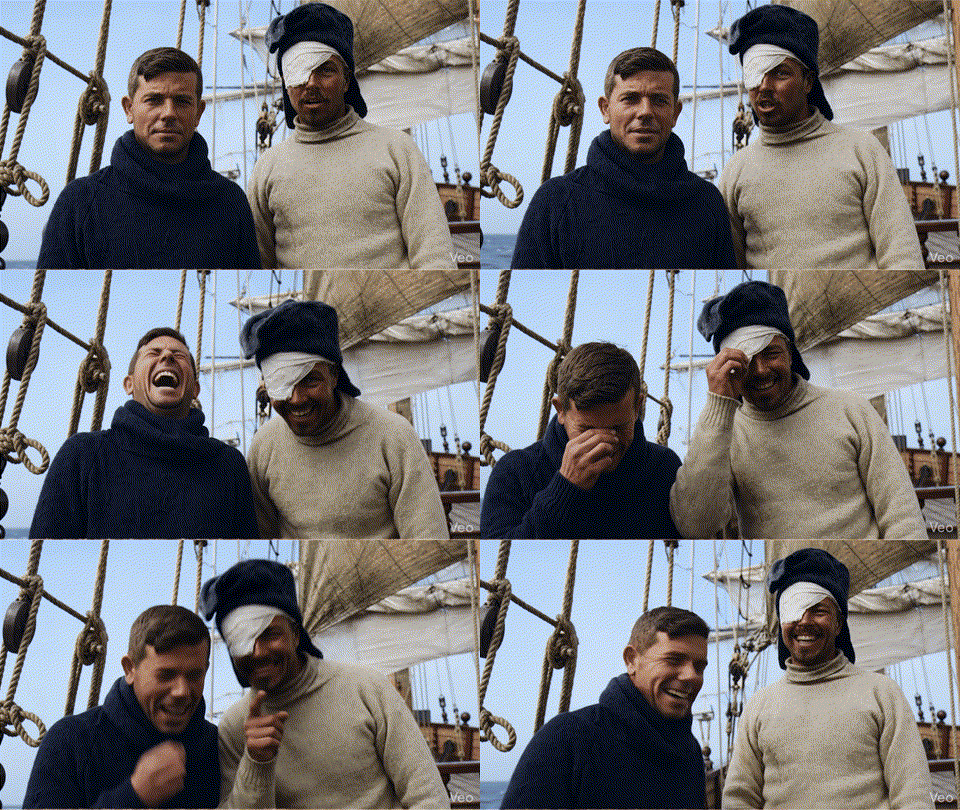
By Dr. Mayank ‘Rocky’ Verma CEO, Kaipability Ltd
Response to: “Europe’s AI endgame? Bet on reliability” — Yoshua Bengio, Financial Times, 21 April 2026 ~ 15mins Read (Excluding Notes)
My son took my hand and lead me to a cemetery yesterday…
He is seven. Cemeteries are not usually his idea of a good time. But he had read about a man called Æneas Mackintosh, and he wanted to find the grave.
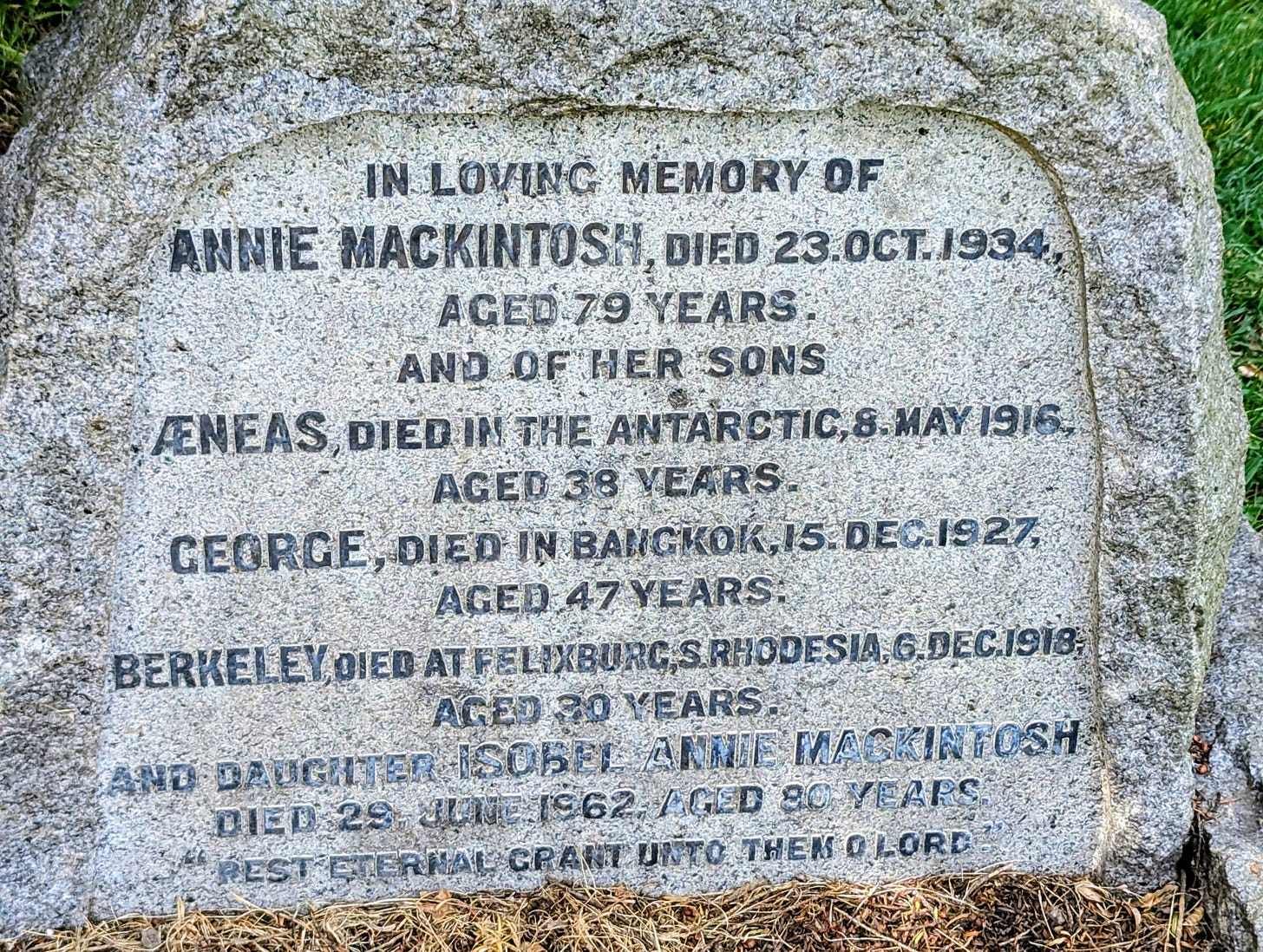
We found it. A rough stone in our local churchyard, with a brown door mouse sitting next to it. Annie Mackintosh, died 1934, aged 79. And of her sons. Æneas, died in the Antarctic, 8 May 1916, aged 38 years. George, died in Bangkok, 1927, aged 47. Berkeley, died at Felixburg, Southern Rhodesia, 1918, aged 30. And daughter Isobel, who outlived them all, dying in 1962 aged 80.
Æneas Mackintosh led the Ross Sea Party, the supply-laying team for Shackleton’s Imperial Trans-Antarctic Expedition. He had already lost an eye on a previous expedition and went back anyway. He and two companions walked out across the sea ice in a blizzard in May 1916 and were never seen again. The supplies they had laid, at the cost of scurvy, frostbite, and eventually their lives, were there when they were needed. The crossing party never arrived. Shackleton’s ship Endurance was already crushed in the Weddell Sea pack ice. The depots were never used. But the capability to lay them existed because Mackintosh existed.
My son stood at that stone for a long time. Then he said: “Why did he go back?”
I have been thinking about that question ever since. Because on the same day, Yoshua Bengio published an op-ed in the Financial Times explaining how Europe should solve its AI adoption problem. The distance between what Mackintosh did and what the article proposes is the distance between going and talking about going.
Ain’t No Better Than the Next Man…Kicking Up Fuss
American AI dominance. Chinese industrial execution.
The op-ed has seen it. The adoption wall preventing European companies from capturing the productivity gains that AI promises. The author wants it for Europe. Fair enough.
His data point is striking: according to McKinsey, 88 per cent of firms report using AI in at least one business function, yet only 1 per cent of leaders consider their strategies mature.
But the statistic deserves scrutiny. The 88 per cent comes from McKinsey’s November 2025 “State of AI” survey of roughly 2,000 participants. The 1 per cent comes from a separate report, “Superagency in the Workplace,” published in January 2025, surveying a different population: 238 C-suite leaders and 3,613 employees, primarily US-based. Both McKinsey. Both 2025. Different surveys, different methodologies. Placing them side by side overstates the precision of what is actually a directional signal.
The direction is still damning. Even the November survey alone shows only one-third of companies scaling AI, and just 6 per cent qualifying as high performers. The wall is real.
A question is what sits on the other side of it?
Behave Young Scallywag
The diagnosis: frontier AI models are opaque.
We cannot guarantee they will behave as intended. For safety-critical industries (aerospace, energy, finance, healthcare) that opacity is a dealbreaker.
His prescription: a dedicated European research institution. Moonshot research into verifiable, safe, and secure AI. Integration with the Frontier AI Initiative and the European AI Gigafactories. Hundreds of millions of euros annually in co-ordinated public funding.
Europe’s industrial brain is not damaged. But it is in need of some repair. And the FT piece is prescribing treatment for one hemisphere while ignoring the other.
The diagnosis is necessary. The prescription is not sufficient. Verifiable AI matters. Without a reliability substrate, deployment in safety-critical sectors cannot happen at all. That half of the argument is sound. But the article treats it as the whole argument. Build better AI, and adoption follows. This is technology-push. This model has been tested repeatedly in European industrial policy. Concorde. European semiconductor programmes since the 1980s. Wave after wave of research excellence that never crossed the valley between the laboratory and the factory floor.
The pattern is always the same: fund the research, declare victory on the science, discover that nobody built the bridge to production. Not one sentence in the article addresses how formally verified AI systems would actually be integrated into the operational environments it names. Not the aerospace production line. Not the energy grid control room. Not the hospital clinical workflow.
The article ends at the laboratory door and calls it a plan.
Blue Blooded Murder of the English Tongue
What does “reliable” actually mean?
To a computer scientist proving formal properties of a model, “reliable” means mathematically bounded behaviour. Provable. To an aerospace quality engineer signing off a First Article Inspection report, “reliable” means this system, in this environment, with this material, under this regulatory framework, will produce conforming parts at a rate the production schedule can sustain. Those two meanings are separated by a discipline, a regulatory architecture, a physical production environment, and twenty years of operational experience.
“Reliable” is not a property of the AI. It is a property of the deployment.
No amount of formal verification will resolve the gap between what the model can prove about itself and what the regulator needs proven about the operational context. That gap is where “Manufacturing Engineers” live. It is the coupling between research and production that Europe has spent thirty years defunding.
There is something deeper here. The article frames the problem as an “adoption wall.” Adoption is a decision. A company decides to adopt a technology. But the barrier is not a decision. It is a capability. And capability is a build. You do not decide your way to capability. You build it, person by person, process by process, qualification by qualification. The language itself reveals the misdiagnosis.
In Life, He Was Dealt Some Shit Hands
This morning I had coffee with a friend. Solo working is bloody lonely and very few spare the drive for a chin wag. An ex-Eddy Engineer, forty years in high precision manufacturing.
We talked about words, then Engineering.
Not as academics do, but as people who have watched a capability disappear and noticed the language died first. “Manufacturing” used to be a verb. It described something people did. Now it describes a sector, a category, a line item in an industrial strategy. The verb died. The capability followed.
The same degradation is happening to “Engineering.” Both words are becoming nouns, things that get managed, funded, restructured, reviewed, rather than verbs that describe practices carried by people.
Civilisations encode their capabilities in language.
Linguistics is a socio-technical system. When we keep inventing nouns (”adoption wall,” “reliability guarantee,” “frontier AI initiative”) we are trying to solve whole-system problems with analytical thinking alone. The tacit knowledge that a Manufacturing Engineer carries, the feel for a process, the instinct for when a system is about to fail, lives in the subconscious, not the neocortex. You cannot write it down. You cannot train a model on it. You transmit it person to person through practice. And when the rope is cut, the vessel that cast it it, the knowledge, drifts away.
We keep inventing nouns for the thing we need. What we need is the verb. And nobody can even say what the verb was, because those who killed it didn’t know it existed.
This is not abstract. I joined the UK’s Financial Conduct Authority’s AI Lab this year. Ten weeks inside the UK’s most advanced regulatory innovation infrastructure, working alongside AI-led firms navigating deployment inside financial services. Different sector. Same structural problem. The models work. The integration into high-consequence operational environments is where everything stalls.
Not because the AI is not reliable enough. Because nobody in the room has spent twenty years qualifying systems for production. Industrial Systems Engineering from a blank page.
None of Us Heard Her Coming
Companies are stuck. The FT piece describes firms trapped between AI that is not yet reliable enough and industries that cannot afford to deploy anything less.
Stuck in pilot purgatory, going crazy on their own.
But the proposed exit is more of the same thinking that built the wall. More research institutions. More co-ordinated funding. More moonshot programmes. The assumption that the thing keeping companies stuck is a deficit of knowledge at the frontier, rather than a deficit of capability at the point of deployment.
Competitive dynamics in frontier AI are not a market failure that public investment can correct. They are the structure of the game. Every capability threshold crossed reveals the next one. The labs cannot pause because pausing is losing. The publicly funded alternative cannot keep pace because it is optimised for consensus, not speed. And even if Europe builds formally verified AI this year, the next generation of models will break the verification framework. The research is round-specific. The translation capability is perennial.
The only asset that persists across competitive rounds is the human capability to translate whatever emerges into production. That capability is not being built. It is being dismantled.
Screams Calling London
This week, on the same day as the FT piece, I spoke with David Adler from MIT’s Initiative for New Manufacturing, another friend. Not a Teams meeting. Not a three-month diary dance. He called, I picked up. That is how it used to work, how it works.
We discussed the “zombies” across fractal systems. The picture is worse than most people realise. Not just the UK.
UKRI, the £8 billion body that sponsors most of Britain’s public research, is going through what the Campaign for Science and Engineering called “a failure in communication and transparency.” Its CEO Ian Chapman told the Commons Science Committee in February that UKRI had “not done a good enough job of engagement.” Richard Jones at Manchester called the restructuring “the biggest upheaval in UK government research funding since the 1980s.” Grant programmes have been paused across multiple research councils. STFC has been asked to find £162 million in savings, with project leaders modelling cuts of up to 60 per cent.
At the same time, Innovate UK has published a new prospectus declaring it will become a “tech due diligence engine.”
Their own diagnosis: “The UK excels at making discoveries, generating intellectual property, spinning out and starting up. Yet when it comes to scaling, too many innovative businesses fail, stall or move overseas.” That is a diagnosis any manufacturing strategist would recognise, and yawn at.
The question is why a government innovation agency is only now arriving at it?
And here is where it becomes structural irony. UKRI is currently recruiting a Chief Development Officer, a newly created Executive Committee role, whose purpose is “transforming UKRI’s ability to convert world class research into national economic and societal benefit.” ARIA, the UK’s answer to DARPA, is simultaneously recruiting a Chief Translation Officer through the same search firm. Same problem diagnosed. Same Odgers. Different organisations. Both reporting into DSIT. Only one half of the valley, again.
Two institutions, one government department, one search firm, and the same job description. Neither has thought to ask why the translation keeps failing.
I get the feeling ARIA’s new CEO is snowed under. Not because she is busy. We have seen it before in the corporate world. She is snowed under because the entire governance architecture above and around ARIA is being rewired in real time. All the while making micro-decisions on a daily basis. DSIT is directing traffic. The Industrial Strategy sector plans are supposed to align with everything. Every agency head is trying to work out what their organisation looks like on the other side of a culling of penguins. Meanwhile, the FT is publishing op-eds proposing that Europe create yet another institution.
On the same day, the UK Semiconductor Centre, a £19 million “national hub” with roughly 20 staff, posted on LinkedIn asking stakeholders what the barriers to semiconductor scale-up are. A publicly funded institution whose entire bloody purpose is to know the answer to that question, asking the internet for opinions. That is not a strategy. It is a confession.
The modern way of industrial policy is to create an institution, staff it with non-industrialists, then ask LinkedIn what it should do.
The Carpet Weren’t Rolled Out
There is something worth noting about the supply chain of this argument.
The FT piece cites a report by “the non-profit SaferAI” as evidence for the scale of the opportunity. SaferAI published a memo in March 2026 advocating for an ARPA-like European institution focused on verifiable AI, the same institutional model the article proposes.
It references the Sovereign Technology Alliance between Germany and Canada, signed at the Munich Security Conference in February 2026. That Alliance explicitly names LawZero as a potential collaborator. LawZero is Bengio’s own organisation.
The article quotes Mark Carney: if middle powers fail to have a seat at the table, they end up on the menu. The question is which table, and who is setting it.
For One Dear Jack, 35 Doppelgängers
The FT piece drew +90 reactions on LinkedIn as of this writing. The overwhelming majority are AI safety researchers, governance specialists, ML practitioners, policy people, and academics. Incredibly smart people. Names from DNV, AI Sweden, the UK Ministry of Defence AI Centre, Helsing, various AI governance startups. The author’s own network, responding to a piece that speaks directly to their professional interests.
Almost entirely absent: people from the industries the article claims to be writing about. No aerospace production managers. No energy grid operators. No hospital clinical directors. No Manufacturing Engineers. No verbs on verbs. No customers. The people whose operational reality the piece invokes are not in the conversation.
The absence of industrialists from a conversation about industrial AI adoption is not a LinkedIn curiosity. It is the adoption wall, measured as an engagement metric.
The piece was written by a computer scientist, published in a business newspaper, engaged with by AI researchers, and proposes solutions that create more work for AI researchers. The people it claims to be serving are elsewhere. They are on factory floors. They are integrating socio-technical systems. They are qualifying processes. They are managing supply chains that cannot afford to hallucinate.
They are not in this conversation because this conversation is not about them. It is about the people who study them.
When I Fall, No One Catch Me
Europe is not alone in this. Every advanced economy faces the same structural problem: a technology research establishment that is well-funded and articulate, and an industrial translation capability that is atrophied and voiceless.
The article is right that competitive dynamics in frontier labs disincentivise deep reliability work. It is right that public investment has a role. It is right that the adoption wall is costing European industry.
But better AI is necessary and not sufficient. Europe does not need another institution to produce research that nobody in industry can operationalise. It needs people who sit at the coupling between what the technology can do and what the production environment demands. People who on a Tuesday morning are simultaneously reading a regulatory qualification framework, arguing with a tooling supplier, and working out whether a process change will hold at rate. It needs Modern Industrialists. And it has spent a generation ensuring there are fewer of them.
The valley of death in European AI adoption is not a research gap. It is a people gap. No moonshot research programme has ever closed a people gap.
Annie Mackintosh buried three sons who went to the ends of the earth. They were not researchers. They were not policy advisors. They were people who went. The modern way is to fund another institution, write another framework, convene another summit, and call it progress.
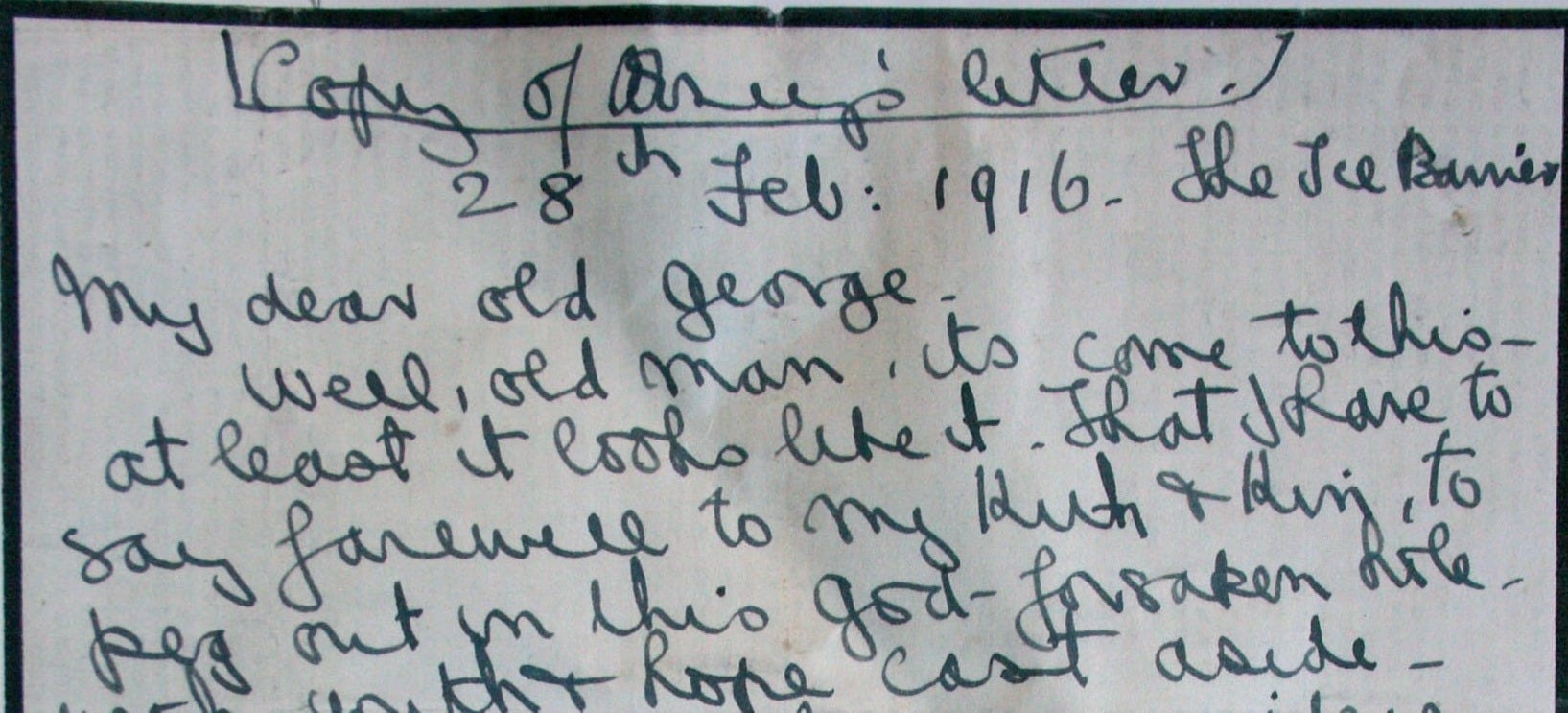
Æneas Mackintosh would have laid the depots. “Then pegged out of this god-forsaken hole”
Paramedic announced death at 10:30
There is a “How.” But it will not be found in this document, and it will not be generated by the most advanced AI on the planet either.
The “How” lives in people. Specific people, with specific knowledge, in specific places. The ones who have spent decades learning what it takes to move technology from laboratory to production in high-consequence environments. They are not hard to find, if you understand the verbs. They are just rarely asked. Why? Because they wear eye patches and are known to smack cracker mans.
If you work in aerospace, energy, defence, healthcare, or advanced manufacturing, and want to talk, get in touch.
mrv@kaipability.com | bookings.kaipability.com
Happy to share context and discuss. Not gatekeeping. Respecting that strategic intelligence is not broadcast content.
About This Document
This article is part of an ongoing digital twin experiment, capturing reasoning patterns developed over twenty years in advanced manufacturing, so they are not lost when the people who hold them retire.
We don’t spend time considering what is “right” or “wrong” research. That’s a discussion we leave to corporate life and the institutions. Without a boss, we have the freedom to spend our time on what we want, and useful research in between our day jobs.
The catalyst was my son, a gravestone in a Sussex churchyard and an FT op-ed that arrived on the same day. One told the story of a man who went. The other described a continent that is still deciding whether to fund a committee to study the question. Our son made the connection before we did. Jamie T provided the architecture, though he probably did not intend “Sheila” for industrial policy. And Æneas carries a ligature in his name, Æ, two letters fused into one, that we did not notice until after the draft was written. The coupling mattered before we knew it was there.
AI without human calibration produces fluent nonsense. Human analysis without AI augmentation leaves patterns unnoticed. This article was drafted with AI assistance. The argument, the judgement, and the accountability are the author’s.
— Rocky Verma, April 2026
Notes
Intent: This critique is intended constructively. Bengio’s diagnosis of the adoption wall is correct and well-evidenced. The gap this piece identifies, between research-led solutions and industrial translation capability, is structural, not personal. The conflict-of-interest observation is offered in the spirit of transparency, not accusation. The author is aware that naming a capability gap he is positioned to fill creates the same structural incentive he identifies in the FT piece. The difference is scale, not kind. It is disclosed here rather than left for the reader to discover.
Sources:
“Europe’s AI endgame? Bet on reliability” — Yoshua Bengio, Financial Times, 21 April 2026
“The State of AI: Global Survey” — McKinsey, November 2025 (1,993 participants across 105 nations)
“Superagency in the Workplace” — McKinsey, January 2025 (238 C-suite + 3,613 employees, primarily US)
“The Case for European Investment in High-Risk, High-Reward AI Reliability Research” — SaferAI (Touzet, Stelling, Galizzi), 24 March 2026
Canada-Germany Sovereign Technology Alliance — Joint Declaration of Intent, 14 February 2026, Munich Security Conference
Æneas Mackintosh: McElrea & Harrowfield, Polar Castaways: The Ross Sea Party of Sir Ernest Shackleton, 1914-17 (McGill-Queen’s University Press, 2004)
Æneas Mackintosh letter to his brother George, 28 February 1916, The Ice Barrier. Copy provided to Wilson McOrist by Anne Phillips, granddaughter of Æneas Mackintosh. Published on social media, July 2021.
“Put the ‘Industrialists’ in the Room...” — Dr. Mayank Verma, Kaipability Substack, January 2026. https://kaipability.substack.com/p/manufacturing-doesnt-need-philanthropy
“It’s a Supermarket Sweep” — Dr. Mayank Verma, Kaipability Substack, March 2026. https://kaipability.substack.com/p/its-a-supermarket-sweep
“Manufacturing Fetishism — All Pleasure, No Production” — Dr. Mayank Verma, Kaipability Substack, April 2026. https://kaipability.substack.com/p/manufacturing-fetishism-all-pleasure
“The Man Who Built the Machine (and the Machine That Can’t Outlive Him)” — Dr. Mayank Verma, Kaipability Substack, March 2026. https://kaipability.substack.com/p/the-man-who-built-the-machine-and
UKRI restructuring: Chemistry World (CaSE), Research Professional News (Chapman Commons testimony, February 2026), Times Higher Education (Richard Jones)
Innovate UK Prospectus — UK Research and Innovation, 2026
UKRI Chief Development Officer — UKRI via Odgers Berwick, closes 1 May 2026
Sheila" (Jamie T, Panic Prevention, 2007) - Article’s soundtrack for your right hand brain. The seam that holds this all together.
Key Terms:
Æneas Mackintosh (1879-1916): Commander of the Ross Sea Party, Shackleton’s Imperial Trans-Antarctic Expedition. Lost his right eye during the earlier Nimrod expedition (1907-09) when a cargo hook struck him. Returned to the Antarctic anyway to lead the depot-laying party. Walked out across the sea ice near Cape Evans on 8 May 1916 with two companions and was never seen again. The depots he laid were in position. The crossing party never arrived. His mother Annie outlived him by eighteen years. The gravestone in our local churchyard lists four of her children, scattered across the Antarctic, Bangkok, and Southern Rhodesia. None of them died at home.
Source: A.V.V (7 yo) - Mentorship and Photo - April 2026 McKinsey AI surveys (2025): Two separate surveys frequently conflated. The “State of AI” (November 2025, 1,993 participants across 105 nations) produced the 88 per cent adoption figure. “Superagency in the Workplace” (January 2025, 238 C-suite + 3,613 employees, primarily US) produced the 1 per cent maturity figure. Bengio cites both in the same paragraph. They come from different populations, different methodologies, and different sample sizes. The direction is consistent. The precision is overstated.
Technology Translation: The process of converting research outputs into operational production capability. Not the same as “technology transfer” (licensing IP) or “commercialisation” (finding a market). Translation requires someone who understands both the technology and the production environment. Both UKRI and ARIA are now recruiting for this role simultaneously. Neither has asked why translation keeps failing. You cannot hire translation capability off LinkedIn. It is built through decades of practice.
FCA (Financial Conduct Authority): The UK’s financial services regulator. Its AI Lab (Supercharged Academy, in partnership with CFTE) is a ten-week programme embedding participants inside the FCA’s innovation infrastructure to work alongside AI-led firms navigating deployment. Different sector from aerospace or energy. Same structural problem: the models work, the integration into high-consequence operational environments is where everything stalls.
Frontier AI: Refers to the most capable AI models at the leading edge of development (GPT-4 class and successors, Claude, Gemini). Also the name of a proposed EU programme (the Frontier AI Initiative) that Bengio cites. The term does double duty: it describes both the technology the labs are racing to build and the institutions Europe proposes to govern it. The ambiguity is structural.
Shackleton, Sir Ernest (1874-1922): Anglo-Irish Antarctic explorer. Led the Imperial Trans-Antarctic Expedition (1914-17), the venture for which Mackintosh’s Ross Sea Party laid depots. His ship Endurance was crushed in the Weddell Sea pack ice before the crossing could begin. The Endurance survival story became one of the most celebrated in exploration history. The Ross Sea Party, which completed its mission at the cost of three lives, is barely remembered.
Zombie Organisation: The term originates with sociologist Ulrich Beck, who used "zombie categories" and "zombie institutions" to describe social structures that are dead but kept alive through continued use. An institution that continues to exist, receive public funding, and produce activity (reports, roadshows, LinkedIn posts) without generating operational value. The UK's innovation infrastructure contains several. They are identifiable by a consistent pattern: they were created to solve a problem, staffed with people who have never experienced the problem, and they measure success by activity metrics rather than industrial outcomes. A zombie organisation can pass every audit and still be completely unfit for its original purpose, because the purpose has been forgotten. "Zombie" is itself a noun. We have no verb for what these institutions do to the system they inhabit. That absence is part of the problem.
Ian Chapman: CEO of UK Research and Innovation (UKRI). Appeared before the Commons Science, Innovation and Technology Committee in February 2026 where he admitted UKRI had “not done a good enough job of engagement.” Presiding over what Richard Jones at Manchester called “the biggest upheaval in UK government research funding since the 1980s.” UKRI has reorganised its budget into three buckets and will no longer confirm overall settlements by individual research council.
Richard Jones FRS: Physicist, Fellow of the Royal Society. Retired September 2025 as Vice-President for Regional Innovation and Civic Engagement at the University of Manchester. Previously Pro-Vice-Chancellor for Research and Innovation at the University of Sheffield (2009-2016), where Keith Ridgway built the AMRC. Member of EPSRC Council (2013-2018). His quote that the UKRI restructuring is “the biggest upheaval in UK government research funding since the 1980s” is cited in this piece. Jones joined Manchester in 2020, sixteen years.
UK Semiconductor Centre (UKSC): A £19 million “national hub” mobilised by CSA Catapult, roughly 20 staff, established June 2025. London headquarters in King’s Cross, joining a concentration of publicly funded innovation bodies in the area. On the same day as Bengio’s FT piece, it posted on LinkedIn asking stakeholders what the barriers to scale-up are. A coordination body that coordinates by asking.
Yoshua Bengio: Turing Award laureate (2018, shared with Geoffrey Hinton and Yann LeCun). Professor of Computer Science, Université de Montréal. Founder of Mila (Quebec AI Institute) and LawZero (safe-by-design AI). Author of the FT op-ed this piece responds to. LawZero is named as a potential collaborator in the Canada-Germany Sovereign Technology Alliance (February 2026). Standard practice in science policy advocacy. Should be visible to readers evaluating the prescription.
Odgers Berwick: Executive search firm. Currently running recruitment for both UKRI’s Chief Development Officer and ARIA’s Chief Translation Officer. Two separate translation roles, two separate institutions, one government department, one search firm. The same diagnosis of the same problem, procured through the same channel, with no apparent coordination between the two.
“God-forsaken hole: Æneas Mackintosh’s own words, from his letter to his brother George dated 28 February 1916, written on the Great Ice Barrier. “Well, old man, its come to this... that I have to say farewell to my kith & kin, to peg out in this god-forsaken hole, with youth & hope cast aside.” He walked out across the sea ice ten weeks later and was never seen again.
Adoption Wall: The measurable gap between AI experimentation and scaled production deployment. McKinsey’s November 2025 survey says 88 per cent of firms use AI in at least one function. The same survey says only one-third have begun to scale. A separate McKinsey report from January 2025 says just 1 per cent of leaders call their AI strategies “mature.” The wall is real either way, but the precision is overstated.
Technology-push: An innovation model where the assumption is that better technology will create its own demand. Contrasts with demand-pull, where market need drives development. European industrial policy has a chronic technology-push bias. Concorde was technology-push. The European semiconductor programmes of the 1980s and 1990s were technology-push. Each produced excellent research and failed to close the gap with competitors who focused on production capability. Bengio’s article is a technology-push argument wearing safety-critical clothing.
Manufacturing Engineer (capital M, capital E): Verb on verb. Manufacturing: the act of making at scale. Engineering: the systematic solving of problems. The only professional title where two gerunds form a reciprocal practice: you engineer the act of manufacturing, and you manufacture through engineering. The capability to create production systems, not merely operate them. The job title is common. The capability is vanishingly rare. Most people hired as “manufacturing engineers” (lowercase) optimise existing lines. Manufacturing Engineers (uppercase) establish sustained productive capability where none existed. See: “A Manufactured Word That Hates Manufacturing” (Kaipability Substack).
Modern Industrialist: Societal progress requires individuals who refuse to adapt to the status quo. The Modern Industrialist is the missing agent for the current industrial revolution, named in Kaipability’s January 2026 piece “Put the ‘Industrialists’ in the Room.” Someone who builds and operates systems that make things, with consequence exposure through commitment. Pro-market, pro-technology, anti-exit. Distinct from old-style Industrialists (who could not exit because their wealth was fixed in local capital). Distinct from Capitalists (who separated ownership from operation by design). Distinct from Tech Bros (who optimise for exit). The Modern Industrialist can exit and does not. They are load-bearing by choice.
Linguistics as a socio-technical system: Language is not a neutral container for ideas. It is infrastructure. Civilisations encode their capabilities in the words they use, and when the words change, the capabilities follow. "Manufacturing" became a noun. The verb died. The capability followed. "Engineering" is going the same way. The adoption wall itself is a linguistic artefact: "adoption" implies a decision, when the barrier is actually a capability, which is a build. Grammar carries civilisational knowledge the same way a production process carries tacit knowledge. Change the grammar and you change what a society can do. Details matter. A single letter in a sentence can change meaning. A single verb lost from a profession can end a discipline. Zombie is not a new one.
Valley of Death: Most commonly described as the gap between research and commercialisation. More precisely: the gap between proving a technology works (Technology Readiness Level) and proving an organisation can produce it at scale (Manufacturing Capability Readiness Level). The distinction matters because the valley of death is consistently misdiagnosed as a funding problem (”we just need more investment to bridge the gap”) when it is actually a capability problem. Funding cannot create capability that does not exist. The people who can bridge the valley are the ones who have done it before, and they are a depleting resource. Every time Europe funds another research programme without investing in translation capability, the valley gets wider, not narrower.
Zombie Organisation: An institution that continues to exist, receive public funding, and produce activity (reports, roadshows, LinkedIn posts) without generating operational value. The UK’s innovation infrastructure contains several. They are identifiable by a consistent pattern: they were created to solve a problem, staffed with people who have never experienced the problem, and they measure success by activity metrics rather than industrial outcomes. A zombie organisation can pass every audit and still be completely unfit for its original purpose, because the purpose has been forgotten. See: Joseph Juran’s definition of quality as “fitness for use, not conformance to specification.”
UKRI (UK Research and Innovation): The £8 billion umbrella body overseeing the UK’s seven research councils plus Innovate UK. Currently undergoing what Richard Jones at Manchester called “the biggest upheaval in UK government research funding since the 1980s.” Has reorganised its entire budget into three buckets and will no longer confirm overall settlements by research council. Grant programmes paused across MRC, BBSRC, and EPSRC. STFC modelling cuts of up to 60 per cent. Now recruiting a Chief Development Officer to “transform UKRI’s ability to convert world class research into national economic and societal benefit.” The translation problem, institutionalised as a job advertisement.
ARIA (Advanced Research and Invention Agency): The UK’s answer to DARPA. Created with cross-party support and an explicit mandate for high-risk, high-reward research freed from conventional research council constraints. Currently recruiting a Chief Translation Officer, the same translation role that UKRI is simultaneously creating at CDO level, through the same search firm (Odgers Berwick). New CEO arrived into an organisation where the entire governance architecture above and around had to be rewired. The question is not whether ARIA can own translation. It is whether ARIA will exist as an independent entity long enough to try.
Innovate UK: The UK’s innovation agency, part of UKRI. Has published a new prospectus repositioning itself as a “tech due diligence engine” for the deep tech ecosystem. Its own diagnosis of the UK’s scaling problem: “The UK excels at making discoveries, generating intellectual property, spinning out and starting up. Yet when it comes to scaling, too many innovative businesses fail, stall or move overseas.” Now claiming exactly the same translation territory that ARIA was created to occupy. Two publicly funded organisations, one government department, competing to solve the same problem, neither staffed with the people who have solved it before.
DSIT (Department for Science, Innovation and Technology): The UK government department directing traffic above all of this. Oversees UKRI, Innovate UK, and ARIA. Setting the bucket framework via Lord Vallance. The department responsible for ensuring these institutions do not duplicate each other’s work. They are duplicating each other’s work.
LawZero: Canadian organisation founded by Yoshua Bengio, working on safe-by-design AI systems. Named as a potential collaborator in the Canada-Germany Sovereign Technology Alliance (February 2026). Bengio’s FT article advocates for the creation of institutions and funding streams that would benefit LawZero directly. Standard practice in science policy advocacy. Should be visible to readers evaluating the prescription.
SaferAI: French non-profit focused on AI risk management. Published the March 2026 memo Bengio cites, advocating for an ARPA-like European institution for verifiable AI research. Proposes initial investment of €65 million per year, ramping to €1.8 billion per year.
Ross Sea Party: The supply-laying team for Shackleton’s Imperial Trans-Antarctic Expedition, 1914-17. Led by Æneas Mackintosh. Tasked with laying depots across the Great Ice Barrier to support a crossing from the Weddell Sea side. Mackintosh had lost an eye during the Nimrod expedition (1907-09) and went back anyway. He and two companions died on the sea ice in May 1916 after laying the depots. The supplies were in position. The crossing party never arrived. The Ross Sea Party did its job and was forgotten.
Æ: A ligature formed from the letters A and E, originally representing the Latin diphthong ae. Two letters fused into one character. Neither A nor E alone, but a coupling that creates something distinct from either component. Æneas carries it in his name. Manufacturing Engineering carries it in its structure: two verbs fused into one practice. The ligature is the discipline. Most modern keyboards cannot produce Æ without searching for it. Most modern institutions cannot produce the coupling it represents without building it from people who carry both capabilities simultaneously. AI historically represented as Æ.
Fact-Checks:
88% AI adoption: Verified. McKinsey State of AI survey, November 2025.
1% mature: Verified. McKinsey Superagency report, January 2025. Different survey from the 88% figure.
SaferAI report: Verified. Published 24 March 2026. €65M/year initial, ramping to €1.8B/year.
Sovereign Technology Alliance: Verified. Signed 14 February 2026, Munich Security Conference. LawZero named as potential collaborator.
Bengio as founder of LawZero and Mila: Verified via FT article byline.
Æneas Mackintosh: Died 8 May 1916, aged 38, on the sea ice near Cape Evans. Led Ross Sea Party. Lost eye during Nimrod expedition (1907-09). Grave inscription verified from photograph.
Mark Carney Davos quote: Referenced by Bengio. Carney became Canadian PM in March 2025; the Davos line is from January 2025.
UKSC budget and staff: Verified. £19 million over four to five years, approximately £3.5 million per year, roughly 20 staff. CSA Catapult mobilisation announced June 2025. London HQ opened April 2026.
UKRI restructuring: Verified. Chapman Commons testimony February 2026 (Research Professional News). CaSE “failure in communication and transparency” (Chemistry World). Jones “biggest upheaval since the 1980s” (Times Higher Education). STFC £162 million savings / up to 60% cuts (Chemistry World).
UKRI Chief Development Officer: Verified. Via Odgers Berwick. Closes 1 May 2026. “Newly created role” on Executive Committee.
Innovate UK Prospectus quote: Verified. Published by UK Research and Innovation.
FCA AI Lab Supercharged Academy: Verified. Author participation confirmed. Ten-week programme, FCA Innovation team and CFTE.
Mackintosh letter, 28 February 1916: Verified. Letter to brother George from the Ice Barrier. Copy provided to Wilson McOrist by Anne Phillips (granddaughter). Published July 2021.
Bengio Turing Award: Verified. 2018, shared with Geoffrey Hinton and Yann LeCun.
Shackleton Endurance crushed: Verified. November 1915, Weddell Sea.
Mackintosh lost eye: Verified. Right eye, cargo hook incident during Nimrod expedition loading, 1907.
Rights and Attribution
© 2026 Kaipability Ltd. All rights reserved.
This document may be shared, forwarded, and referenced with attribution to Kaipability Ltd and the author Dr. Mayank ‘Rocky’ Verma.
For commercial use, republication, or adaptation, please contact mrv@kaipability.com to request permission.
When citing or forwarding, please include: “Smart Enough to Fail. Stupid Enough to Do It Again.” — Kaipability Ltd, April 2026.
Get AI to say this while losing 75% of the words. More bang for your book.
The diagnosis is precise - especially the shift from verbs to nouns as a leading indicator of capability loss. Two observations underneath it.
First: AI deployment is not the first translation failure. Making Tax Digital has been in progress since 2015 - eleven years for what is, structurally, a simpler problem than anything involving frontier AI. No model opacity, no safety-critical decisions. Just getting tax records from spreadsheets into a digital format. Meanwhile, several countries solved the same problem years ago - not partially, but completely: every invoice, every receipt, every tax filing, machine-to-machine, mandatory, end-to-end digital from day one. Same problem. Different outcome. The gap is not technological. It is institutional.
Second: the system that built the valley cannot cross it from inside. Karl Deutsch described this in 1963 as pathological self-closure - systems that overvalue internal messages over external ones and imprison themselves in an invisible rut of their own making. Every cycle of fund-institution-recruit-CDO widens the valley, because the people who could have built the bridge spent another cycle not building it. The debt grows exponentially. The institutional response is itself a symptom: each restart produces a shorter effect. The countries closing the gap fastest are not building better research institutions. They are building alongside - different structures, different people, different logic. The exit is never inside the loop.